
Are you curious about your dog’s origins? Do you want to know if his sparkling eyes hide an ancestral secret, or if his unique coat tells a story of mixed breeds? DNA tests can reveal the secrets of his genetics and unique traits. And while some require veterinary intervention, others can simply be done at home with your dog’s saliva. Find the best DNA tests for your best companion in this article.
Our selection of the best DNA tests for dogs
- Koko Genetics (5% discount with code KOKOSTORY): best DNA test for dogs focused on detecting hereditary diseases and understanding behavioral characteristics
- Quick DNA: the best DNA test for dogs, fast, accurate, and with an extensive breed database.
- EasyDNA: the best value for money DNA test for dogs
Laboratories | Promotional code | Price | Number of breeds covered | Genetic diseases tested | Time to results |

| 5% discount – code : “KOKOSTORY“ | ; | +400 | 150 | 4 to 6 weeks |

| ; | 650 | 2538 | 72 hours | |

| ; | + 350 | 120 | 2 to 3 weeks |
🥇Koko Genetics

The dog DNA kit from Koko Genetics provides a comprehensive analysis of your pet’s genetic makeup, revealing its breed origins among more than 400 breeds, its physical characteristics, and screening for more than 150 hereditary diseases. In fact, it combines two tests in one, analyzing more than 710,000 markers to provide detailed information about your pet’s breeds, physical traits, and health.
| Sampling tool | Oral swabs |
| Processing time | 4-6 weeks |
- In-depth analysis with over 710,000 genetic markers
- Accurate identification of breeds and physical traits
- Option to add over 175 health reports without a new sample
- Free and automatic feature updates
- Results processing time of up to 6 weeks
- Need to return the sample from the country of purchase, which may incur additional costs in case of non-compliance
🥈 Quick DNA animal genetics test

The animal genetics test from the Quick DNA laboratory is one of the best DNA tests on the market. This test reveals your dog’s type, strains, and variety based on a database of 650 breeds. With this DNA test, you can now establish your companion’s parentage.
The Quick DNA test screens for 2,538 common genetic diseases and gives you a clear picture of your dog’s hereditary health. The analyses are carried out by experts in molecular genetics using cutting-edge techniques. The data remains confidential and the results will be sent to you by email within just 72 hours of receiving the samples.
| Sampling tool | Cheek swab |
| Processing time | 72 hours |
- Identifies the type and variety of canine among 650 breeds
- Detects and analyzes the dog’s predisposition to 2,538 genetic diseases
- The test helps identify your pet’s parents, grandparents, and great-grandparents
- The DNA test provides information on drug sensitivity
- The analysis laboratory is ISO 1705 accredited
- Samples are analyzed by personnel specialized in genetic manipulation
- Discreet, unlabeled sample shipping
- Personal data security
- Results in just 72 hours
- Risk of incorrect sampling
- Use of a single kit per animal
🥉EasyDNA
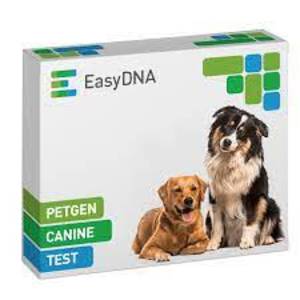
The Belgian laboratory EasyDNA offers a wide range of canine DNA tests. These analyses can help you better understand your dog’s breed, allergy causes, and genetic predispositions.
The EasyDNA teams compare your pet’s samples to a database of more than 350 breeds. The reliability of the results is guaranteed to be 99.9%. EasyDNA’s animal DNA test can also establish parentage and detect hereditary diseases (such as degenerative myelopathy) in your canine.
| Sampling tool | Cheek swab |
| Processing time | 2- 3 weeks |
- The test can identify more than 350 breeds
- Screening for 120 allergens
- Tests for specific hereditary diseases
- Excellent value for money
- Offers the possibility of discovering the dog’s regions of origin
- Tests specific to each breed
- Requires manual sampling
- Risk of incorrect sampling
- Results depend on the breed tested
What is a dog DNA test kit?
The dog DNA kit includes a swab, a return label, and instructions. It offers owners and breeders the opportunity to discover their pet’s breed, lineage, and possible hereditary diseases. Purchasing these kits eliminates the need for visits to the veterinarian for costly blood tests. Results are usually sent by email or can be viewed online after a few weeks. In addition, there are also DNA tests for cats, another faithful companion to humans.
What information will a dog DNA test provide you with?
Using an animal genetic test can provide you with a wealth of information about your dog.
Your dog’s breed
DNA tests for dogs use a technology called “genetic fingerprinting,” similar to that used in criminology. These genetic profiles make it possible to identify a dog, accurately trace its genealogy, and confirm its parentage. The tests use DNA sequences called markers to identify your dog’s breed from among 250 to 350 unique breeds.
If you have a mixed-breed dog, these tests can reveal the breeds that contributed to its genetics. You will also obtain additional information about your dog’s temperament and appearance.
Your dog’s parentage
DNA tests can help you establish your dog’s parentage. Whether your dog is mixed breed or purebred, you can now learn more about its lineage. You can connect your pet to other dogs based on the percentage of DNA they share.
Genetic predispositions to certain diseases
DNA testing reveals your dog’s genetic predispositions to various diseases. These kits can screen for more than 150 hereditary conditions such as glaucoma, muscular dystrophy, and Von Willebrand disease.
A simple examination of your dog’s saliva can help detect the presence of the MDR1 gene, which indicates sensitivity to certain medications. Knowing all this information makes you more vigilant as an owner. And if you are a breeder, you will be able to make informed decisions about mating your dogs.
Physical characteristics and nutritional requirements
DNA testing will help you determine your puppy’s current weight and adult weight. You will receive advice on your dog’s diet based on its size, coat, and breed. This information and these recommendations can help you choose the right diet for your dog to ensure better physical health.
What are the different types of DNA tests for dogs?
There are several types of DNA tests for dogs, each with a specific purpose.
Breed identification DNA test
This test uses your dog’s saliva and genetic markers to confirm its parentage and trace its genealogy. For mixed-breed dogs, these tests reveal the different breeds that make up their genetics. The breed identification test helps you understand your dog’s behaviors, health needs, and physical characteristics. The tests that can accurately provide this type of information are Embark and Wisdom Panel.
The DNA test to determine genetic health
This test screens for genetic predispositions to certain diseases. It also identifies the dog’s genetic susceptibility to certain diseases. With this test, you can determine the appropriate foods to keep your dog healthy. This type of DNA test is primarily intended for breeders, but also for owners.
Specific trait test
This test reveals specific characteristics such as your dog’s eye color or shedding level. It is often used for aesthetic reasons or to understand certain behaviors in dogs.
How do dog DNA tests work?
Dog DNA testing is carried out in several stages.
Ordering the DNA test kit
To find out the breed and genetics of your four-legged friend, you need to order the kit online from the laboratory of your choice. The product will be delivered to the address you provide, along with all the accessories needed to collect the sample.
Collecting and sending the sample
Dog DNA can be collected in different ways. The most common method is to use a swab to collect cells from the dog’s cheek. Although blood sampling is considered the gold standard for obtaining high-quality DNA, it requires the intervention of a veterinarian.
Mouth swabs are easy to use and can be performed by owners themselves. However, DNA collected in this way may be contaminated by bacteria or even DNA from other animals. Once the sample has been collected, you must send it in the envelope provided to the laboratory for analysis.
Analysis and interpretation of results
Once at the laboratory, the DNA is analyzed to confirm kinship, determine the dog’s breed, and detect hereditary diseases or drug sensitivities. For example, some tests can identify whether a dog carries the MDR1 gene, which indicates sensitivity to certain drugs.
Test results are generally easy to interpret, although some may require specialized knowledge. The results will then be sent to you after 2 to 4 weeks, usually by email or via an online dashboard.
Top tips for successfully collecting your dog’s DNA sample
Take the sample in the morning
We recommend taking your dog’s buccal sample early in the morning, right after they wake up. At this time, they will not have eaten anything yet. This prevents food residue from being present in their mouth and makes it easier to collect saliva.
Be careful
When using buccal swabs for canine DNA testing, handle them by the stem to avoid contamination. Any contact with the sample may alter the results. After collection, place the sample in the container provided and follow the shipping instructions to preserve its quality.
What should you look for when choosing a DNA test for dogs?
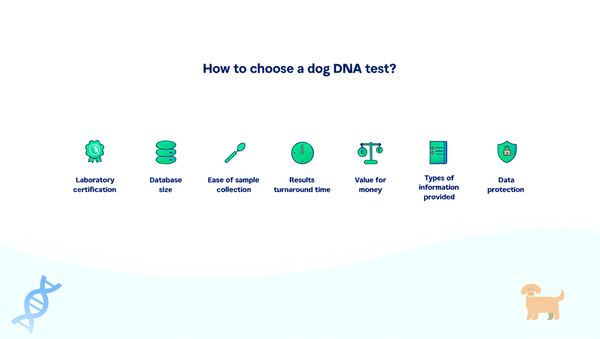
When choosing a DNA test for dogs, it is essential to consider several criteria to ensure the quality and relevance of the results obtained. Here is what you should look for:
The name and reputation of the laboratory
When searching for a DNA test for your dog, you should look for a high-quality testing laboratory with a good reputation. Look for ISO 1705 certified laboratories. This is a guarantee of the reliability of the results.
The database and accuracy
Samples are analyzed using an algorithm that compares them to multiple DNA sequences to ensure accuracy. However, not all dog DNA tests refer to a universal database.
While Embark and Wisdom Panel boast databases covering more than 350 breeds, others are limited to 100 or 250 breeds. Keep in mind that the more breeds in the database, the more accurate the results.
Therefore, when selecting a test, consider the richness of the database and the claimed accuracy. For example, Wisdom Panel claims over 98% accuracy for its breed results.
Sample collection technique
The sample collection method is also an important criterion to consider. Most kits provide clear instructions and a tool for collecting DNA from your four-legged friend’s mouth. You should review the safety measures provided to ensure proper collection.
Turnaround time
The time it takes to get results depends on the lab you choose. Most of the tests we reviewed deliver results in less than 4 weeks. Some labs offer real-time tracking of your sample’s processing via a dedicated platform. However, your motivation for testing and your patience will determine which test you choose.
Cost and value for money
The cost of dog DNA tests varies between brands. We recommend comparing the prices of each company to get the best value for money based on your needs and budget.
Information provided
Not all DNA tests provide the same information. Some focus solely on breed identification, while others may also provide information on genetic predispositions to disease or certain conditions. Depending on your reason for testing, choose a test that meets your specific needs.
Confidentiality and Data Security
Protecting your data and that of your dog is essential. Make sure the laboratory you choose complies with confidentiality standards and does not share your information without your consent.
Are dog DNA tests reliable?
The reliability of dog DNA tests depends on the competence of the laboratory and the analysis methods used. As a general rule, DNA tests for dogs are carried out by accredited laboratories in Europe. These laboratories are made up of teams of experts who use advanced technologies to ensure the accuracy of the results.
Tests designed to identify a dog’s breed are based on the examination of genetic markers associated with specific canine lineages. This ensures a high level of accuracy. However, the detection of genetic diseases is less reliable, as these conditions do not manifest themselves in all specimens.
How to interpret the results of a dog DNA test?
Generally, laboratories strive to make DNA test results easy to read. To this end, you will receive a comprehensive report after the sample has been analyzed. This report may include:
- Breed profile
- Health information
- Hereditary traits
- Family tree
- Advice and recommendations
In reality, you will have no great difficulty reading and understanding the information provided by the laboratory. However, if you have any concerns, particularly health-related ones, we recommend that you seek the advice of your veterinarian for a more detailed analysis.
Practical use of canine DNA test results
DNA test results have a direct use in your dog’s daily life. You can share them with your veterinarian to improve your dog’s treatment and medical follow-up. They can also help you personalize your dog’s training program by taking into account the natural abilities inherited from its lineage.
Focus on the prices of DNA tests for dogs
The price of DNA tests for dogs also varies depending on the brand and the desired results. Here is the price range offered for this type of analysis by Quick DNA, Koko Genetics, Easy DNA :
- KOKO Genetics : 84,99 € (starter)-129,99 €(advanced)
- Quick DNA : 99, 90 €
- EasyDNA : 79 €- 239 €
The cost of a DNA test, added to the laboratory fees for analysis, can be significant. To reduce this expense and ensure your dog’s well-being, consider taking out dog insurance. This way, the costs associated with the test could be covered or reimbursed by your insurance company.
Where can you buy a DNA test for dogs?
When it comes to buying a DNA test for dogs, there are several options available to you. You can purchase DNA tests for dogs at specialty pet stores. Online platforms also offer a variety of DNA test kits for dogs. You will find popular brands that are appropriate and will provide you with accurate results.
DNA test for dogs or Campbell test: which one to choose?
It is essential to understand the objectives and benefits of both tests before making a choice.
The dog DNA test
The dog DNA test is designed to determine your dog’s breed, ancestry, and sometimes genetic predisposition to a particular disease. These tests are often used by dog owners who want to learn more about their pet’s genetic heritage.
The Campbell test
The Campbell test is a behavioral tool used to assess a puppy’s tendency toward dominance or submission. It can help determine whether a puppy will be a good fit for a particular family or living situation.
When making your decision, consider your needs. If you want to learn more about your dog’s genetics, opt for a DNA test. If you are more interested in your puppy’s behavior and personality, the Campbell test may be more appropriate. In any case, it is always recommended to consult a veterinarian or dog behaviorist for expert advice.
How did we test our dog DNA tests?
In order to offer you a reliable analysis, we selected and purchased 10 dog DNA tests. All kits were tested on the same dog: a Boxer x Bulldog crossbreed, chosen for its interesting genetic profile and representative of mixed-breed dogs.
Each test was carried out under real-life conditions. The buccal sample was taken according to each laboratory’s instructions and then sent for analysis. Our evaluation focused on several key criteria: the time taken to obtain the results, and the quality and relevance of the information provided by each test.
In addition, we took into account our tester’s feedback on the overall experience, from sample collection to receipt of results. Our recommendations are therefore based on concrete results obtained from the same genetic profile.