
AffinityDNA review
Our genealogists’ overall review of AffinityDNA
With more than 15 years of experience in the DNA testing market, AffinityDNA offers a wide range of DNA tests: paternity, kinship, ancestry, health and wellness, as well as tests for animals, with the option to pay for the prenatal paternity DNA test in 3 installments. DNA samples are analyzed in accredited and certified laboratories using state-of-the-art processing methods. DNA results are generally available in as little as 4 weeks, with an accuracy rate of up to 99.99%.
AffinityDNA at a glance
| Criteria |  |
|---|---|
| Website | |
| Trade name | AffinityDNA |
| Headquarters | Hove (East Sussex, United Kingdom) |
| Operating company | EDL International, LLC |
| Business | Sale of DNA tests for humans and animals |
| Testing performed by | Independent partner laboratories |
| Accreditations | Depending on the partner laboratory: ISO/IEC 17025 and AABB |
| Types of tests offered | Paternity Kinship Prenatal tests Ancestry DNA test Health and wellness DNA test Animal DNA tests (dogs, cats, horses, birds) Forensic testing |
| Sampling methods | Cheek swab Blood draw for prenatal tests Hair for certain intolerance tests and drug tests Feathers or blood for birds |
| Processing times | From 3 business days to 9 weeks, depending on the test |
| Results | Report sent by email Online platform for certain tests Paper copy available as a paid option |
| Price | From €23 to €859 |
| Customer service | Phone, email and contact form, Monday through Friday, 9:30 a.m. to 5:30 p.m. |
AffinityDNA’s strengths and limitations
- A wide catalog of DNA tests covering genealogy, parentage, health and animals
- Tests tailored to specific situations: absent alleged father, non-standard samples, legal or immigration proceedings
- The DNA kit ships one business day after the order is placed
- The option to make your own kit to collect DNA samples
- Analyses performed by accredited partner laboratories
- An express option to get paternity and maternity test results faster
- A refund on the paternity test taken with the mother if the result is inconclusive
- A 100% money-back guarantee on the baby’s sex test
- Payment in 3 installments for the prenatal DNA test
- Processing times vary depending on the test selected
- Analysis reports mostly in English
DNA tests available at AffinityDNA
DNA tests for humans
Ancestry and Genealogy DNA Tests
The GPS origins test to trace your genetic origins
The GPS Origins™ ancestry DNA test helps you trace your ancestors and better understand your family origins. It estimates the regions where they may have lived over the past 1,000 years, with a level of precision that goes beyond broad continental regions.
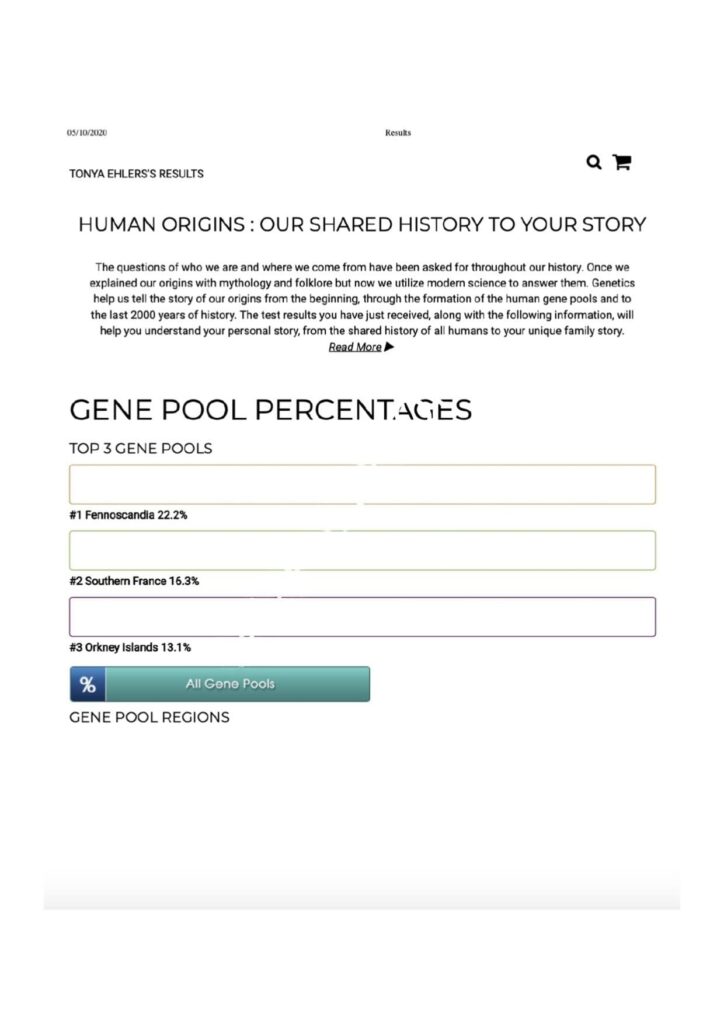
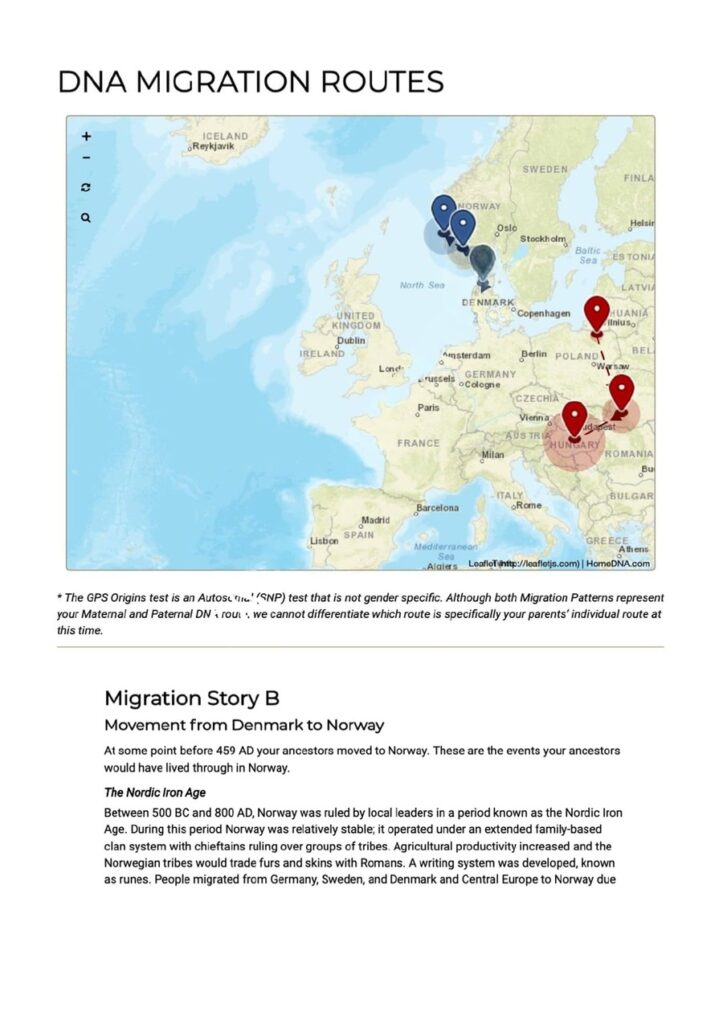
To build your profile, the test analyzes your autosomal DNA and compares it to 36 gene pools from around the world. This comparison estimates your genetic affinities with specific countries, regions and sometimes even cities or islands.
The results are compiled in a detailed, interactive report that shows:
- your three main gene pools;
- the estimated percentage of your genetic affinities;
- a map of the regions associated with your origins.
The report also provides comparisons with different populations and historical information about your ancestors’ migrations.
The ancient DNA hub
AffinityDNA also offers an Ancient DNA Hub. Using your genetic data, it looks for similarities with ancient and modern individuals to explore the possible origins and migrations of your lineages. The hub includes more than 15,000 ancient individuals and 30,000 modern individuals.
Depending on the analysis you choose, it also lets you examine your maternal and paternal haplogroups to trace certain branches of your ancestry. If you already have raw DNA data from a compatible service, you can import it for free to run additional analyses.
The paternal lineage test to explore your paternal line
This DNA test explores the history of your paternal lineage, passed down from father to son over generations. Using a cheek swab, the laboratory analyzes the Y chromosome, specifically markers known as STRs (short tandem repeats), to determine your paternal haplogroup.
The results trace the ancient geographic origins of this lineage and your ancestors’ major migrations since the earliest human populations. The report includes a personalized map of the estimated migration routes, along with a guide to help you understand your results.
This test cannot determine a specific nationality or trace your entire family tree. It is for men only. A woman can explore her paternal line only by having her father or a biological brother tested.
The maternal lineage test to explore your maternal line
This test analyzes mitochondrial DNA (mtDNA), which mothers pass on to their children, to trace the ancient origins of your maternal lineage. It identifies your maternal haplogroup, a genetic group that traces the history of this lineage back several millennia.
Studying this haplogroup sheds light on your ancestors’ ancient migrations and the regions where they may have lived.
The report includes a personalized map of estimated geographic origins and the corresponding time periods. It also describes your haplogroup, the populations associated with it and other people who share this genetic group. This test only covers the direct maternal line.
Paternity DNA tests

Paternity DNA tests aim to determine whether a man is the biological father of a child. AffinityDNA offers several options depending on the situation, the number of participants and the intended use of the result.
The at-home paternity test
Using cells from the inside of the cheek, the at-home paternity DNA test analyzes 21 genetic markers to establish the biological relationship between a child and the alleged father. The mother’s participation is not required, but it makes the result more reliable.
The laboratory then has the profiles of the child, the mother and the father to refine the comparison. The probability exceeds 99.99% without the mother’s DNA and reaches 99.999% when the mother takes part.
The legal paternity test
Unlike the at-home test, the legal paternity test establishes a biological relationship for legal or administrative purposes (inheritance, immigration). It follows a strict procedure:
- verification of the participants’ identities;
- sample collection by an independent professional;
- sealing and chain of custody of the samples all the way to the accredited laboratory.
The prenatal paternity test
The prenatal paternity test looks for a biological relationship between an alleged father and an unborn baby. The test can be performed from the 7th week of pregnancy, counted from the first day of the last menstrual period. It relies on a blood draw from the mother, with no invasive procedure such as amniocentesis, which can cause a miscarriage or an infection of the amniotic fluid.
The laboratory analyzes the cell-free fetal DNA present in the mother’s blood. It compares more than 13,000 genetic markers from the unborn baby with those of the alleged father. The report gives either a probability of paternity above 99.9999% or an exclusion (0%). It can also reveal the baby’s sex.
The reliability of the test depends on the quality of the blood sample. The laboratory also declines the test in certain cases: alleged fathers who are close relatives (brothers, father and son, twins), a family relationship between the mother and the alleged father, cancer, preeclampsia, a recent blood transfusion or transplant in the mother.
The discreet paternity test
The discreet paternity test is for people who want to have a sample other than a cheek swab analyzed. The laboratory accepts more than 30 types of samples, including:
- hair with the root;
- cigarette butts;
- fingernails;
- bloodstains;
- saliva;
- semen.
The chances of getting a usable result vary with the type of sample and how it was stored. AffinityDNA’s success rate exceeds 90% for blood, saliva or semen. It ranges from 60 to 90% for cigarette butts and fingernails, and falls below 60% for hair or a toothbrush.
This test cannot be ordered directly on the website. It requires informed consent and an ID document from each participant.
Relationship DNA tests

The sibling DNA test
AffinityDNA’s sibling DNA test compares your genetic profile with that of an alleged brother or sister. It determines whether you are half-siblings (one shared parent) or full siblings (two shared parents). This DNA test can also replace a paternity test when the alleged father is deceased, unavailable or refuses to take part.
The twin zygosity DNA test
Physical resemblance is not always enough to tell whether two twins share the same genetic makeup. AffinityDNA’s twin zygosity DNA test compares your profiles to determine whether you are identical (monozygotic) or fraternal (dizygotic) twins.
This test also has medical value. Identical twins can donate blood to each other. They can also donate an organ to each other with a low risk of rejection, on the advice of healthcare professionals.
The grandparent DNA test
This DNA test assesses the biological relationship between a child and the alleged parents of their father or mother. It is useful when the alleged father or mother cannot take a paternity or maternity test.
Analyzing samples from both grandparents and the grandchild helps reconstruct the genetic profile of the untested parent. AffinityDNA provides a report with a probability of biological relationship. This probability can still be low, even when a relationship actually exists.
The aunt/uncle and niece/nephew DNA test
AffinityDNA’s avuncular DNA test examines the relationship between an uncle or aunt and a nephew or niece. It is useful when the alleged father or mother cannot take part in a relationship test. The laboratory compares the participants’ genetic profiles and calculates an avuncular index.
An index below 1.00 indicates no biological relationship. An index above 1.00 indicates that the two people tested are more likely to be related. This result is statistical and generally less conclusive than a paternity or maternity test.
The Y-chromosome test
AffinityDNA’s Y-chromosome DNA test establishes a family connection with another man without a direct paternity test. The laboratory compares your profiles at 10 genetic markers to check whether you share a common paternal line.
This DNA analysis only indicates a possible family relationship. On its own, it cannot tell you whether you are brothers, father and son, or related through a more distant paternal ancestor.
The maternity DNA test
The maternity DNA test confirms or rules out a biological relationship between an alleged mother and a child. The laboratory compares the DNA profiles of the alleged mother and the child. When the relationship is confirmed, the probability of maternity exceeds 99.99%.
This DNA test can be used in cases of adoption, immigration proceedings, in vitro fertilization (IVF), surrogacy or suspected baby switching at the maternity ward. AffinityDNA also offers a legal version, with independent sample collection and chain of custody.
The mitochondrial DNA test
This DNA test determines whether you share a common maternal ancestor with one or more people. It is based on mitochondrial DNA (mtDNA), which you inherit from your mother, who in turn received it from her mother.
Men also carry this DNA, but they do not pass it on to their children. The laboratory compares the participants’ mitochondrial profiles to check whether they share the same maternal line. The results confirm or rule out a common maternal ancestor, without specifying the exact relationship or the number of generations between you.
The genetic reconstruction test
This DNA test assesses paternity when the alleged father cannot be tested. It requires at least four participants, in one of the following configurations:
- two close biological relatives of the alleged father, the child and the child’s biological mother;
- three close biological relatives of the alleged father and the child.
These relatives must be first-degree relatives of the alleged father: his parents, full siblings or children. The laboratory compares the genetic markers and provides an indirect probability of paternity.
Health, Nutrition and Wellness DNA Tests

The DNA Methylation Genetic Test
The DNA methylation test helps you understand certain biological mechanisms linked to the expression of your genes. It analyzes 92 genes and 113 genetic polymorphisms (SNPs). The report covers several areas of your health:
- cardiovascular health: blood pressure, cholesterol and heart function;
- gut health: digestion, microbiota and food sensitivities;
- cognitive function: neurotransmitters and brain function;
- skin health: collagen production and sun sensitivity;
- immune system: inflammation and allergic reactions;
- metabolism: glucose, lipid and weight management.
You get information about certain genetic predispositions and suggestions for your diet and lifestyle. On their own, these results cannot diagnose a disease or predict your health with certainty.
The Gut Microbiome Analysis
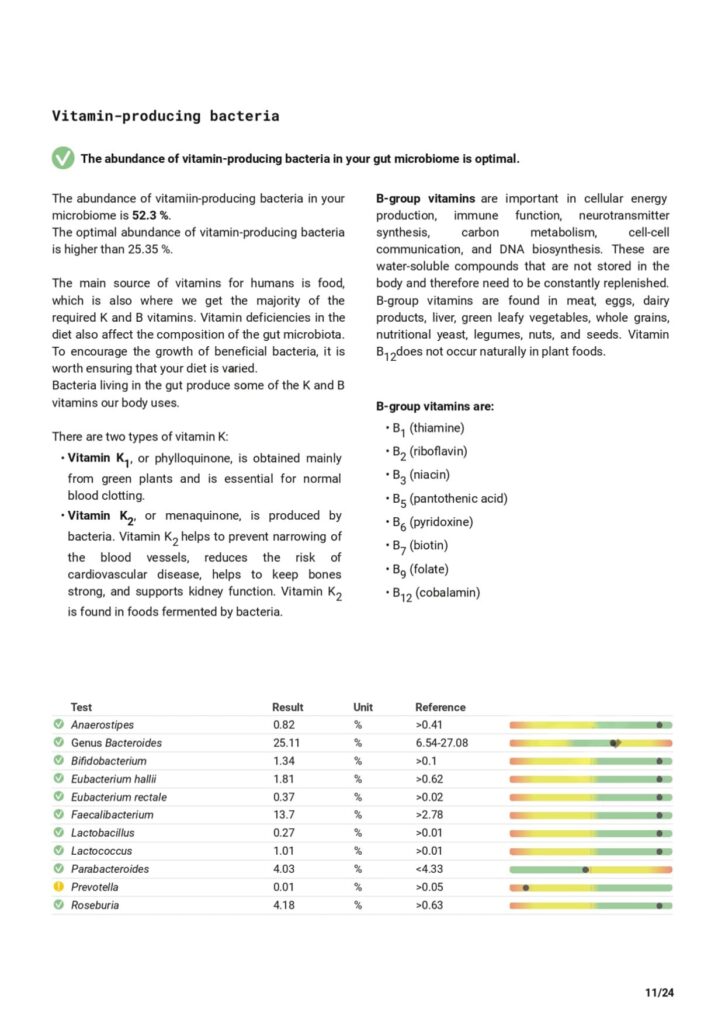
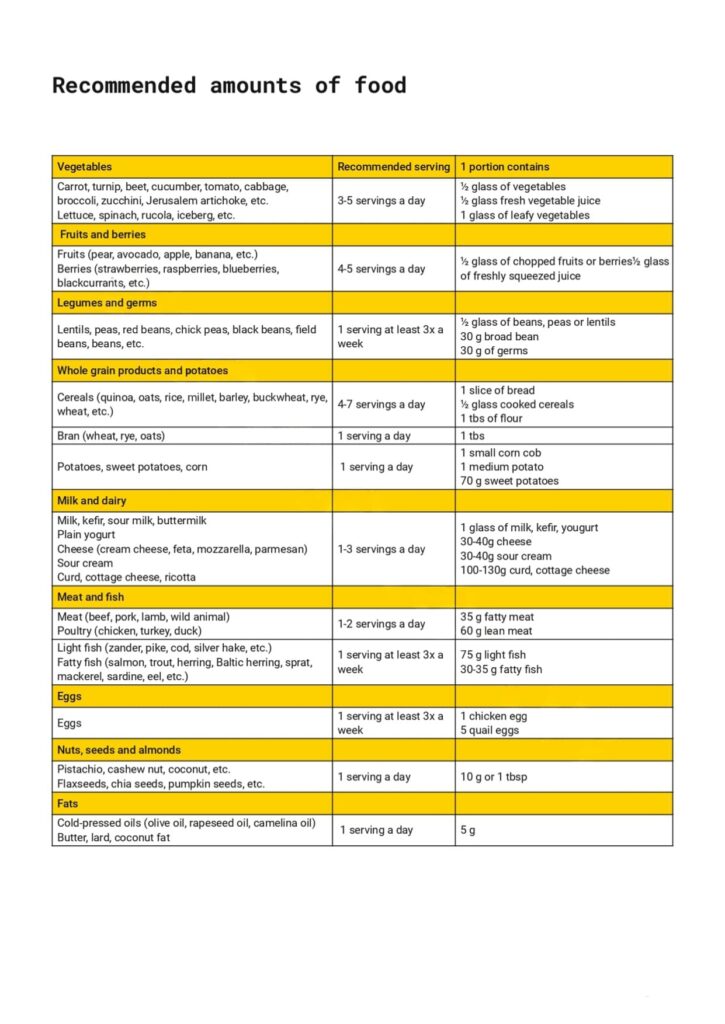
Like Vivabioma or 24Genetics, AffinityDNA’s gut microbiome test analyzes the composition of the gut microbiome and provides information on its potential links to diet.
The report identifies the bacteria in your gut and their potential role in your body. It shows whether your gut flora is balanced and suggests dietary changes to improve it. The analysis uses a small stool sample collected at home.
AffinityDNA also offers tests for intolerances and allergies, skin care and metabolism. They tell you about your food intolerances and help you choose cosmetics suited to your genetic profile. Others assess how you metabolize caffeine and alcohol, or your predisposition to nicotine addiction.
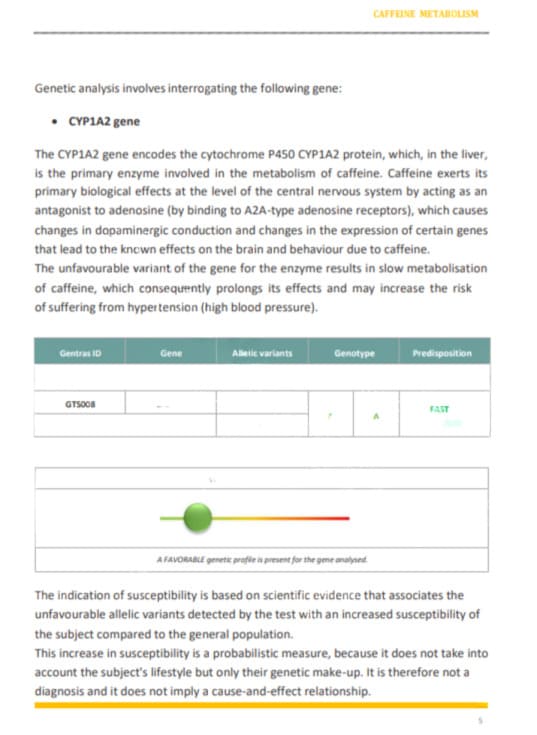
None of these tests replaces a medical consultation. Also, the food intolerance test is not a genetic test. It analyzes a hair sample using bioresonance.
DNA Tests for Animals
The Dog DNA Test
AffinityDNA offers 16 DNA tests for dogs, divided into five main categories:
- Breed identification: analysis of 174,000 genetic markers and comparison with more than 430 breeds.
- KnowYourDog: information on the dog’s physical traits and genetic health profile.
- Age estimation: estimates a dog’s age, especially when it was adopted with no known history.
- DogCheck 4.0: screens for more than 220 diseases and hereditary traits.
- Targeted genetic tests: degenerative myelopathy, MDR1 multidrug resistance, progressive retinal atrophy PRA-prcd and von Willebrand disease, among others.
The range also includes intolerance and allergy tests, a gut microbiome analysis and a canine paternity test.
The Cat DNA Test
For cats, AffinityDNA offers seven tests covering your cat’s health, ancestry and diet:
- KnowYourCat: the cat’s breed origins among 39 breeds, genetic traits and certain hereditary health risks.
- CatCheck: screens for more than 75 genetic diseases and analyzes the blood type as well as certain hereditary traits.
- PKD test: detects the mutation associated with polycystic kidney disease. It especially helps breeders identify cats likely to pass on this condition.
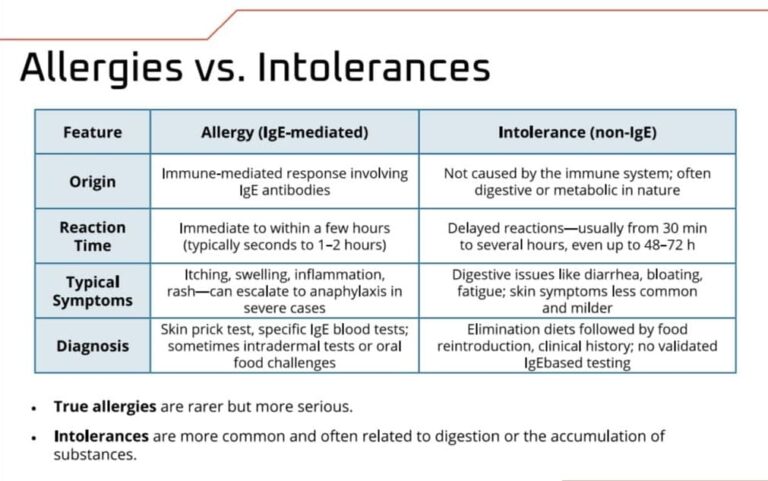
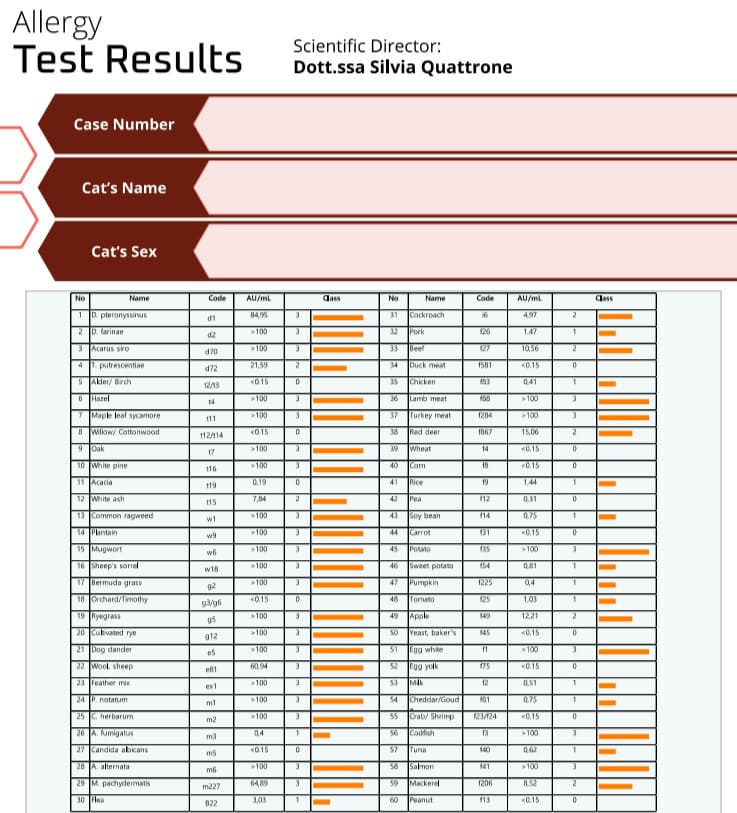
- Intolerance test: assesses the cat’s reactivity to nearly 200 foods and environmental factors, from a fur sample.
- Allergy test: analyzes up to 125 common allergens, from a drop of blood collected at home with a lancet.
- Gut microbiome test: analyzes the bacteria present in the stool, with more than 5,000 detectable types of bacteria.
- Age test: estimates the cat’s age when its date of birth is unknown.
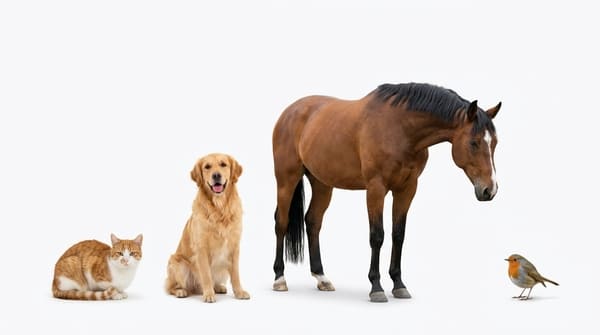
With 7 DNA tests for cats and 16 for dogs, the range meets the needs of pet owners and breeders alike. AffinityDNA also offers tests for horses and birds. These analyses help identify certain genetic traits, screen for predispositions to hereditary diseases and better understand certain behaviors linked to the animal’s genetic makeup.
Other Services Offered by AffinityDNA
In addition to these tests, AffinityDNA offers complementary services and tests:
- The infidelity test: looks for DNA on a suspicious item, underwear or a bed sheet, and shows whether it comes from a man, a woman or both.
- The semen detection test: confirms or rules out the presence of semen on fabric with 100% certainty.
- At-home STI testing: tests for 4 or 7 sexually transmitted infections, with no visit to a doctor’s office.
- Human papillomavirus (HPV) screening: detects 28 HPV subtypes, including 19 high-risk and 9 low-risk subtypes.
AffinityDNA also offers services related to your DNA profile, such as the electropherogram, which provides the raw data from your analysis. The range also includes hair drug tests.
- Traces your origins by comparing your DNA with 36 gene pools over the past 1,000 years.
- Explores your maternal and paternal lineages and your ancestors’ migrations through haplogroups.
- Establishes paternity between an alleged father and a child, even from the 7th week of pregnancy, without invasive sampling.
- Confirms or rules out maternity with a probability above 99.99%.
- Reveals the baby’s sex before birth with the prenatal test.
- Tells identical twins apart from fraternal twins.
- Covers every family relationship: siblings, grandparents, aunts and uncles, Y chromosome and genetic reconstruction.
- Analyzes your intolerances, allergies, microbiome and 92 genes linked to health, skin and metabolism.
- Screens for more than 220 hereditary diseases in dogs and more than 75 in cats.
- Identifies the breed of dogs, cats and horses, as well as their hereditary diseases.
- Determines the sex of birds with 99.9% accuracy.
How does a DNA test work at AffinityDNA?
Ordering and Receiving the Kit
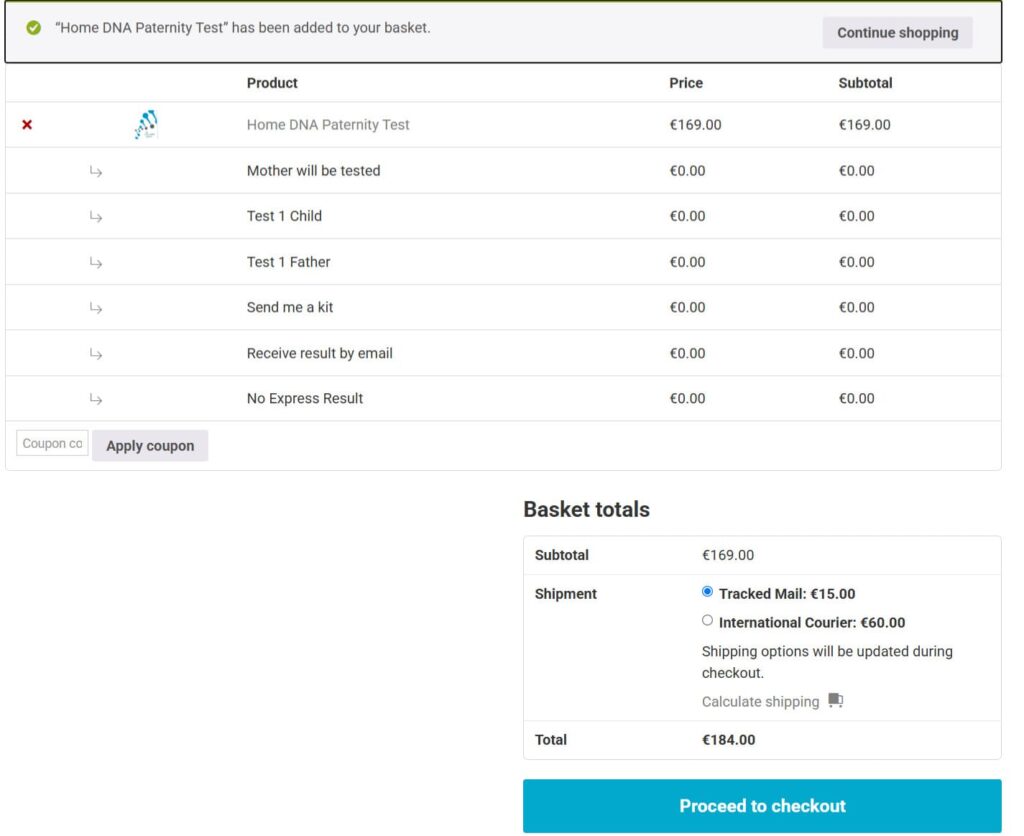
To order, go to the official AffinityDNA website, choose your test and pay by card (Visa, Mastercard or American Express), via PayPal or by bank transfer. The kit arrived in a white envelope marked “Private & Confidential”, with no visible logo or company name.
Collecting and Sending the Samples
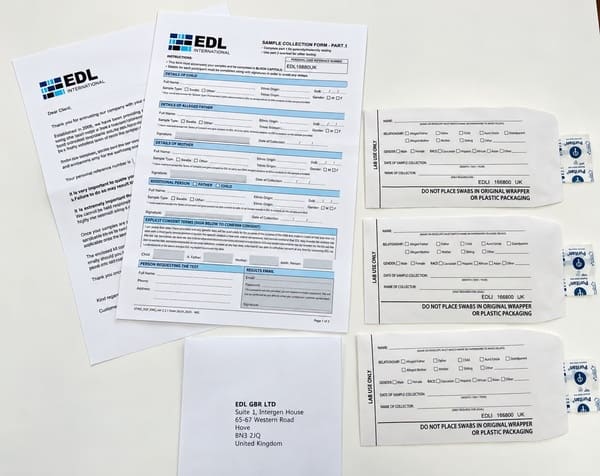
The DNA kit contains everything needed for sample collection, the instructions and a consent form. You can also put together your own collection kit. The type of sample depends on the analysis you choose.
Most relationship tests use a simple swab of the inside of the cheek. For prenatal tests (paternity and baby’s sex), the blood draw must be performed by a doctor or nurse. Then send the samples back to the laboratory following the kit instructions.
Sample Processing Times
| Test | Time after the samples are received |
|---|---|
| At-home, legal or immigration paternity | 3 to 5 business days |
| Paternity or maternity with express option | 3 business days guaranteed |
| Maternity, twin zygosity | 3 to 5 business days |
| Siblings, aunts and uncles | 5 business days |
| Grandparents | 5 to 7 business days |
| Genetic reconstruction | 7 business days |
| Y chromosome | 8 to 10 business days |
| Mitochondrial | 20 business days |
| Prenatal paternity | 5 to 7 business days |
| Baby’s sex | 7 business days, 4 with express |
| Atypical sample (discreet test) | 2 extra business days, 10 for a tooth or bone |
| Semen detection | 10 business days |
| STI testing | 7 to 10 business days |
| Human papillomavirus (HPV) | 10 business days |
| Food intolerance, hair drug test | 3 to 5 business days |
| DNA methylation | 10 to 15 business days |
| Skin care | 5 to 10 business days |
| Gut microbiome | 4 to 5 weeks |
| KnowYourself / KnowYourself Ultra | 4 to 6 weeks / 5 to 6 weeks |
| GPS Origins, paternal and maternal lineages | 6 to 9 weeks |
| Dog breed | 3 weeks |
| DogCheck 4.0 | 3 to 4 weeks |
| KnowYourCat | 4 to 6 weeks |
| Equine DNA profile | 10 business days |
| Bird sexing | 3 to 5 business days |
These times start when the laboratory receives the samples. You also need to add the time to ship the kit and mail it back. A postal delay, an unusable sample or an incomplete form can extend the wait even further. So you may receive your results much later than expected.
AffinityDNA DNA test prices
| Test or option | Price |
|---|---|
| At-home paternity (father and child) | €169 |
| Additional participant (child or father) | €100 |
| Paternity or maternity express option | €119 |
| Legal paternity | €399 |
| Immigration paternity | From €499 |
| Prenatal paternity | From €859 |
| Atypical sample surcharge (discreet test) | From €75 per sample |
| Baby’s sex | From €129 |
| Baby’s sex express option | €40 |
| Baby’s sex return courier | €70 |
| Maternity | €169 |
| Twin zygosity | €139 |
| Siblings | €269 |
| Aunts and uncles | €269 |
| Y chromosome | €269 |
| Grandparents | €299 |
| Mitochondrial | €329 |
| Genetic reconstruction | From €359 |
| Ancient DNA Hub | Free membership, one test included with GPS Origins |
| Paternal lineage | €129 |
| GPS Origins | €139 |
| Maternal lineage | €159 |
| KnowYourself / KnowYourself Ultra | €159 / €329 |
| DNA methylation | €249 |
| Gut microbiome | €149 |
| Food intolerance | €69 |
| Skin care | From €79 |
| Dog breed (430 breeds) | €115 |
| DogCheck 4.0 | €139 |
| KnowYourCat | €109 / €139 |
| Equine DNA profile | From €59 |
| Bird sexing | €23 per bird |
| Semen detection | From €129 |
| Infidelity | From €399 |
| At-home STI testing | From €89 |
| Human papillomavirus (HPV) | From €99 |
| Hair drug test | From €80 |
| Electropherogram (option) | €50 |
AffinityDNA’s prices sit in the upper-middle range of the market. The at-home paternity test costs €169, compared with €119.88 at Quick DNA. The gap widens for the prenatal test: €859 at AffinityDNA versus €359.88 at Quick DNA. For dog breed testing, however, AffinityDNA is slightly cheaper (€115 versus €119.88).
For the prenatal paternity test, AffinityDNA lets you pay 50% of the price when you order, then pay the balance when you send back the samples. Payment in 3 installments, available with Klarna and PayPal, also spreads out the cost and makes this test more accessible.
A closer look at the reliability and accuracy of AffinityDNA DNA tests
AffinityDNA’s analyses are performed by independent partner laboratories accredited to ISO/IEC 17025 and AABB standards, among others. These laboratories are located in the United States, the European Union, the United Kingdom, Australia and Canada. The brand also claims more than 15 years of experience. Like EasyDNA, another well-known company in the industry, it belongs to the Endeavor DNA group.
Paternity tests analyze 21 genetic markers, and the prenatal test relies on next-generation sequencing (NGS). The money-back guarantees on the paternity test with the mother (if the result is inconclusive) and on the baby’s sex test also show the brand’s confidence in its analyses.
How does AffinityDNA protect your genetic data?
AffinityDNA applies a GDPR-compliant privacy policy. Your data is managed by EDL International, the company that operates the brand. It only shares your data with partner laboratories and service providers, such as carriers, to process your test. Your data is neither sold nor used for advertising.
DNA samples may be kept for up to six months after the test. Genetic profiles and reports are kept for up to 12 months for standard tests, and up to 60 months for legal or immigration tests. You can request access to your genetic data, its correction or its deletion.
AffinityDNA customer reviews
On Trustpilot, AffinityDNA has a rating of 2.5 out of 5 from 11 reviews. That number of reviews is too small to form a clear opinion. According to the published reviews, customers appreciate the fast turnaround of at-home paternity tests, the responsive customer service and the quick refunds on kits. The main complaint concerns errors in test results.
Our genealogists’ final verdict on AffinityDNA
We like the variety of AffinityDNA’s catalog, which includes 86 DNA tests covering a range of needs and types of analysis. The lab’s range of relationship DNA tests is well suited to complex situations: an absent alleged father, an unconventional DNA sample or immigration proceedings. We also appreciate the health, wellness and pet tests.
This variety makes it possible to find tests for many needs, not just parentage. In addition, AffinityDNA is accredited by the UK Ministry of Justice and works with partner laboratories in Europe, the United States, Canada and Australia, which shows how serious it is.
A reliable provider for paternity and relationship testing
AffinityDNA offers 15 relationship DNA tests. This range covers almost every family configuration, from a simple father-child duo to a four-person genetic reconstruction test. We were convinced by the accuracy of the at-home relationship DNA tests.
When the relationship is confirmed, the probability of paternity exceeds 99.99%. The baby’s sex test is also 100% accurate, which confirms the reliability of the analytical methods used.
Easy-to-understand DNA results
Results are sent by email as a report with colorful charts and tables. Some tests, such as KnowYourself, also come with an online platform, and a paper copy is available as a paid option. The reports are easy to understand, even with no background in genetics.
For the paternity DNA test, for example, our report shows a table of genetic markers with a column for the child, the father and the alleged mother, along with the type of DNA sample analyzed. It also gives the conclusion, with the paternity index for each genetic marker analyzed and a probability of paternity.
Most reports are only available in English. However, customers who are not comfortable with English can get help from customer service by phone, email and contact form, Monday through Friday, from 9:30 a.m. to 5:30 p.m.
An accredited laboratory with installment payments
We like the flexible payment options for the prenatal DNA test, whose price puts off many expectant parents. You can pay 50% when you order and the balance when you send back the samples, or pay in three installments with Klarna or PayPal. Quick DNA and EasyDNA, for example, do not offer installment payments.
That said, this flexibility does not come at the expense of quality. The analysis is still handled by an accredited laboratory, as with the brand’s other tests. Still, we find it a shame that the other tests remain somewhat expensive.